The Pieces You Own But Never Let Yourself Wear
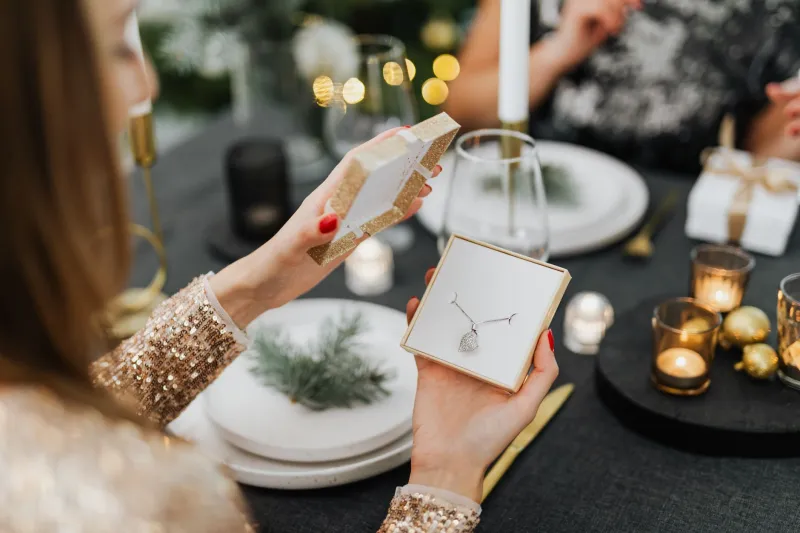
There's a particular kind of closet archaeology that happens when you're running late and slightly desperate. You pull open a drawer, dig past the everyday stuff, and there it is — that necklace, that cuff, that pair of earrings that stopped your scroll the moment you first saw it. You bought it because something in you needed it. And now it lives in a drawer, quietly waiting for a day that never quite arrives.
This isn't about forgetting you own something. This is something different. This is knowing exactly what's in there and choosing, almost unconsciously, not to reach for it.
Let's talk about why.
The Gap Between Buying and Wearing
When you buy a piece that genuinely excites you, you're usually operating from a version of yourself that feels a little freer than usual. Maybe you're in a good mood. Maybe the lighting in the boutique was doing something magical. Maybe you were just tired of playing it safe and something finally clicked.
That version of you made a real choice. She saw a bold geometric earring or a layered statement collar and thought: yes, that's me. Or at least — that's who I want to be.
The problem is, you have to go back home to your actual life. And your actual life has a whole committee of opinions about what's appropriate, what's too much, and what people are going to notice.
So the piece goes into the drawer. And you go back to the safe earrings.
The Perception Problem Nobody Talks About
Here's the thing that most style advice skips over: a huge part of why we don't wear our boldest pieces isn't about taste. It's about fear of being perceived differently.
Wearing a statement piece changes how you enter a room. It invites comments — sometimes compliments, sometimes questions, sometimes just looks. And for a lot of us, that visibility feels risky in ways that are hard to articulate. We worry people will think we're trying too hard. Or not trying in the right direction. Or that the piece will say something about us we're not ready to own out loud.
This is especially true for pieces that feel distinctly you — the ones that aren't trend-driven or easy to explain. The ones that feel personal. Because if you wear something personal and someone doesn't get it, that rejection feels closer to home than if they just didn't like your outfit.
So instead, you protect yourself by keeping the piece hidden. And in doing so, you hide a little bit of yourself along with it.
When "Saving It" Becomes Avoiding It
There's a version of this that gets dressed up in reasonable language. I'm saving it for the right occasion. It's too nice for a regular Tuesday. I'll wear it when I feel more confident.
These all sound sensible. But if you've been saying them for six months — or two years — they're not logistics. They're excuses. And they're worth examining honestly.
Asking yourself what would have to be true for me to feel ready to wear this can be surprisingly revealing. Sometimes the answer is genuinely practical: you need a different outfit to pair it with, or you haven't found the right context yet. But often, the answer is something softer and harder to solve. You'd need to feel like you deserved to take up that kind of space. You'd need to stop worrying about what your coworkers think. You'd need permission from someone — and you're not sure who.
The uncomfortable truth is that permission isn't coming from anywhere external. You're the one withholding it from yourself.
What Your "Too Bold" Pieces Are Actually Telling You
Every piece you own that you consider too much for everyday life is pointing at something. Maybe it's a style direction you're curious about but haven't committed to. Maybe it's a version of your identity that's still forming. Maybe it's just evidence that you have more range than your daily rotation suggests.
None of that is a problem. It's actually kind of exciting, if you let it be.
Instead of treating those pieces as aspirational objects you haven't earned yet, try treating them as information. What drew you to this? What were you imagining when you bought it? What kind of life were you picturing yourself living?
That's useful data. And it's yours.
A Simple Framework for Reclaiming Your Own Closet
If you want to start actually wearing the things you've been hiding, the trick isn't to go from zero to full statement overnight. That kind of forced boldness usually backfires — it feels performative instead of genuine, and you spend the whole day tugging at the necklace wondering if people are staring.
Instead, try this:
Start with low-stakes contexts. Wear the piece on a weekend errand run, or a coffee shop visit where you'll mostly be anonymous. Get used to how it feels on your body before you wear it somewhere that feels high-pressure.
Pair it with something grounding. Your boldest piece doesn't have to carry the whole outfit. Let it coexist with something simple and familiar. That contrast often makes the statement feel more intentional, not less.
Give yourself a specific day. Not "someday" — a real day on the calendar. Tuesday. Put it in your phone. When Tuesday comes, wear the piece. That's it.
Stop narrating it to other people. One of the things that makes bold accessories feel risky is the impulse to pre-explain them. Oh, I know these earrings are a lot. You don't owe anyone context. Wear the thing and let it speak for itself.
The Closet Isn't the Problem
Your drawer full of untouched pieces isn't a storage problem. It's a self-permission problem. And it's more common than most people admit, especially among people who care deeply about style — because caring deeply about style also means caring deeply about how you're read by the world.
But here's what we believe at Nicole Moon Designs: the pieces you're drawn to aren't accidents. You chose them. Something in you recognized something in them. That's worth honoring — not by keeping them pristine in a drawer, but by actually wearing them out into your life.
You already own the pieces. You already made the choice. The only thing left is to trust it.