Accessory Debt Is Real — Here's How to Figure Out Which Pieces Are Actually Worth Keeping
You Probably Own More Than You Think You Do
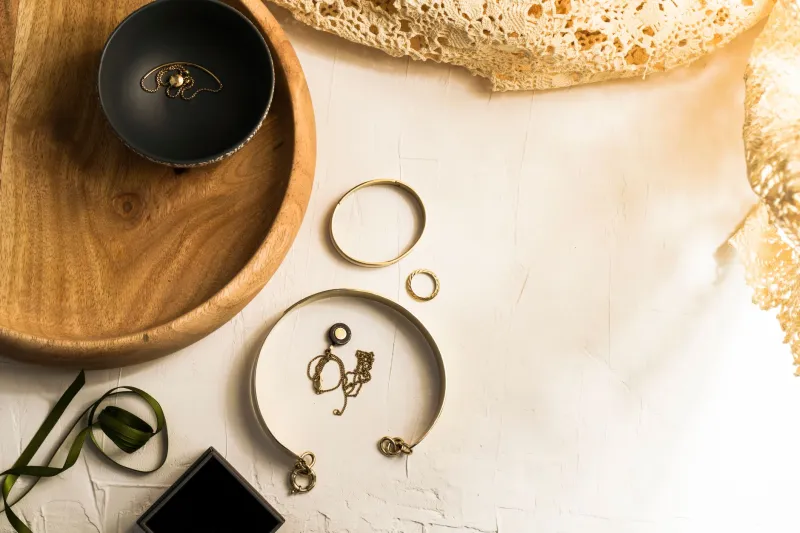
Open your jewelry box — or that little dish on your dresser, or the tangled pile in the corner of your top drawer — and take a real look. How much of what's in there do you actually reach for? And more honestly: how much of it makes you feel something good when you see it?
If the answer is "not much," you're not alone. Most of us accumulate accessories the same way we accumulate everything else: a little at a time, with the best intentions, across years of different versions of ourselves. A bracelet from a trip you took in your twenties. Earrings you bought because you were trying to be more "put together." A necklace you kept because someone gave it to you and it felt wrong to let it go.
None of those are bad reasons to own something. But at some point, the collection stops being a resource and starts being a burden.
What "Accessory Debt" Actually Means
Here's a concept worth sitting with: accessory debt. It's what happens when you hold onto pieces not because they're serving you, but because you feel obligated to keep them — out of guilt, sentimentality, or some future scenario you keep imagining but never actually living.
You know the feeling. You see that pair of statement earrings you bought two years ago and never wore, and instead of just moving on, you think, I really should wear those sometime. That little mental transaction? That's debt. It costs you something every single time — a small but real expenditure of mental energy, a flicker of guilt, a tiny sense of clutter in your brain even when the physical clutter is hidden in a drawer.
Multiply that by ten pieces, twenty pieces, thirty — and suddenly your accessory collection isn't a source of joy or expression. It's a to-do list you never finish.
The Audit: A Straightforward Approach
The goal here isn't to Marie Kondo your entire jewelry collection in one afternoon. It's to get honest about what's working and what isn't. Here's a simple way to do it.
Pull everything out. Not just the nice stuff — all of it. The stuff in the back of the drawer, the pieces you forgot you had, the things you've been meaning to fix or clean or deal with "eventually." Lay it out where you can see it.
Pick up each piece and notice your first reaction. Not your second or third reaction — the one where you start negotiating with yourself. The very first feeling. Does something lift a little? Or does your stomach do that subtle drop that means you're already bracing for the obligation of it?
Ask three questions:
- Have I worn this in the last twelve months?
- When I imagine wearing it now — not in some hypothetical future outfit — does that feel good or does it feel like a costume?
- If I came across this piece in a store today, would I buy it?
You don't need all three answers to be "yes" for a piece to stay. But if all three are "no," that's worth paying attention to.
The Emotional Categories You'll Probably Find
Once you start sorting, things tend to fall into a few buckets that are worth naming.
The Workhorses. These are the pieces you reach for without thinking — the ones that feel like you in a way that's almost automatic. They're not always the most expensive or the most impressive. They're just right. These earn their real estate without question.
The Aspirational Pieces. These are the ones you bought for a version of yourself that hasn't fully shown up yet. Sometimes that's fine — sometimes we do grow into things. But be honest about whether you're still moving toward that version of yourself, or whether you've quietly moved in a different direction. There's no shame in the latter. It just means the piece has run its course.
The Obligation Keepers. Gifts, inherited pieces, things tied to relationships or memories. These are the hardest to sort through because the emotional weight isn't really about the object — it's about the person or moment attached to it. Worth noting: keeping something out of guilt doesn't honor the memory. It just clutters the present. If a piece genuinely moves you when you hold it, keep it. If it only makes you feel like you should keep it, that's different.
The Forgotten Gems. Sometimes the audit surfaces things you'd completely lost track of — pieces that, when you pick them up again, feel like rediscoveries. These are the best surprises. Set them somewhere visible and actually bring them back into rotation.
What to Do With What Doesn't Make the Cut
Letting go of accessories doesn't have to mean throwing them away. Depending on what you've got, there are real options.
Sell pieces with resale value — platforms like Poshmark, Depop, or even local consignment shops are solid choices for accessories in good condition. Donate pieces that are in good shape but not worth the hassle of selling. Gift specific pieces to specific people if you genuinely think something would mean more to someone else. And for things that are truly worn out or broken beyond repair, it's okay to just let them go.
The physical act of removing something from your space is part of the process. It completes the transaction.
Building a Collection That Actually Reflects You Now
Here's the thing about doing this kind of audit: it's not really about minimalism. You don't have to end up with ten pieces and a capsule jewelry wardrobe if that's not who you are. The point is alignment — making sure what you own reflects where you actually are, not where you were or where you vaguely hope to be.
When your collection is full of pieces that genuinely resonate — things that feel like expressions of your actual current self rather than relics of past selves or down payments on future ones — getting dressed in the morning gets easier. Not because you have fewer choices, but because every choice in front of you is a real one.
That's what it looks like when your accessories are working for you instead of the other way around. And honestly? That's what getting dressed should feel like.