Once a Season, Open the Box: A Fresh Approach to Reviewing the Jewelry You Already Own
Somewhere in your home, there's a piece of jewelry you completely forgot about. Maybe it's tangled in the back of a drawer, or sitting in a velvet pouch you haven't opened since last winter. It didn't disappear. You just stopped reaching for it — and at some point, that became a habit.
A seasonal accessory audit is a way of breaking that habit. Not by getting rid of things, not by organizing everything into color-coded trays (though honestly, no judgment if that's your vibe), but by actually checking in with what you own. Four times a year, you take stock. You notice what's been working, what's been sitting out, and what's been hiding. That's it. That's the whole framework.
Simple, yes. But the shift it creates? Surprisingly significant.
Why Seasonal, Specifically
Your style doesn't stay the same year-round, even if your wardrobe tries to. The way you dress in July — looser, lighter, maybe more skin — calls for a completely different accessory language than the way you dress in November, when you're layering up and everything you own is suddenly in competition for attention.
The pieces that feel effortless in summer can feel off in fall, and vice versa. That layered gold chain that looked amazing with a linen tank? It might get visually lost under a chunky knit. The bold statement earrings you loved at a rooftop event in August might feel like too much for a gray Tuesday in February.
None of that means the pieces are wrong. It means they have a season. And if you're not paying attention to those rhythms, you end up defaulting to the same safe rotation — not because it's your favorite, but because it's familiar.
Checking in four times a year gives you a built-in opportunity to reset that default.
What the Audit Actually Looks Like
Forget the word "audit" if it sounds clinical. Think of it more like a reunion. You're sitting down with everything you own and asking: where have you been? What have I missed?
Here's a loose structure that works:
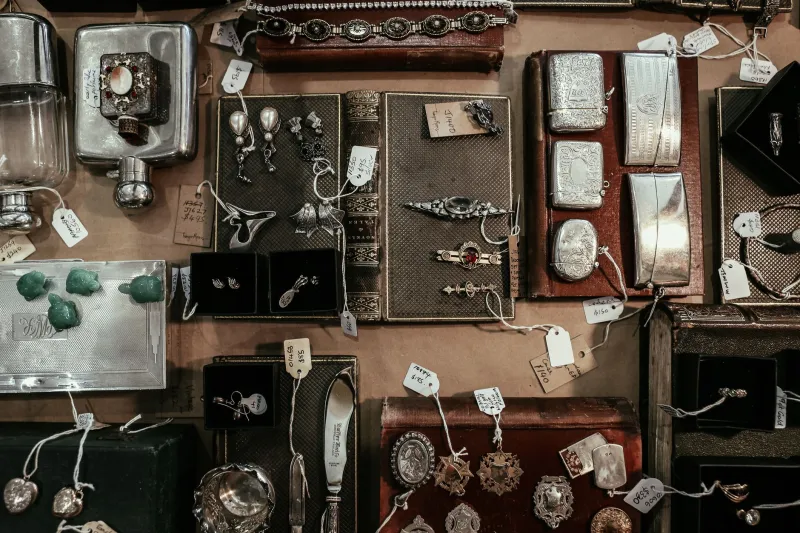
Pull everything out. Not just the stuff on your dresser — the drawer pieces, the travel pouch pieces, the things you bought on a trip and never really integrated. All of it, visible at once.
Sort by what you've actually worn. No judgment here, just honesty. There's the everyday rotation, the occasional-but-intentional pieces, and the ones you genuinely can't remember the last time you put on.
Ask why for the ones you've been skipping. This is the most interesting part. Sometimes the answer is obvious — a necklace that tangles constantly, earrings that are heavier than they look. But sometimes the answer is more nuanced. A piece might feel out of sync with who you are right now. Or it might just need a different context than the one you've been trying to force it into.
Look at what the new season is calling for. Think about the clothes you're about to lean into. What's missing from your current rotation that might actually already be in the drawer? This is where forgotten pieces get rediscovered — not because you went shopping, but because you finally looked.
The Rediscovery Effect
There's something genuinely exciting about pulling out a piece you forgot you owned and realizing it's exactly what your wardrobe needs right now. It's like finding money in a coat pocket, but better — because it also tells you something about your own taste.
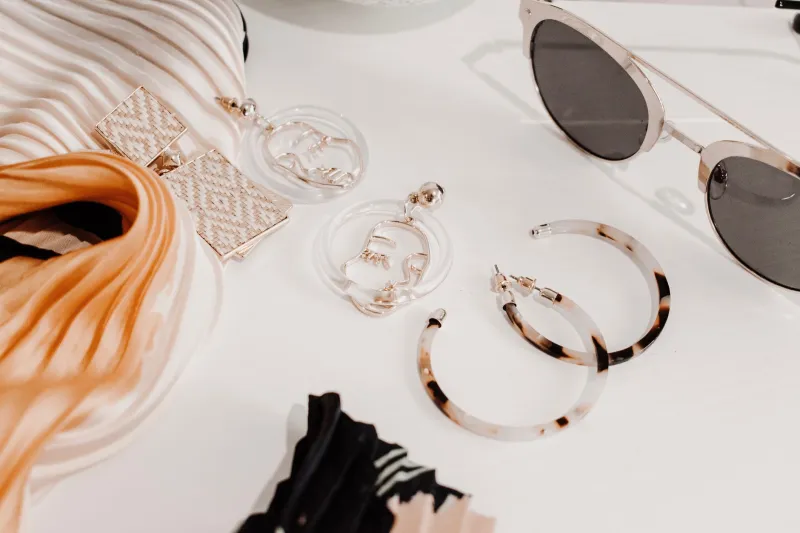
Maybe you bought a pair of sculptural earrings two years ago and never really wore them. At the time, they felt like a stretch. Now, looking at them again, they feel completely natural. That gap isn't a mistake — it's evidence that your style has been quietly evolving, and the piece was just waiting for you to catch up.
This is one of the more underrated aspects of building a personal style that actually feels like yours: you don't always have to buy new things. Sometimes you just have to revisit the things you already chose, and ask whether you're ready for them now.
Connecting the Seasonal Shift to Something Bigger
There's a reason so many people find themselves drawn to moon cycles, seasonal transitions, and natural rhythms when it comes to how they approach their wardrobe. It's not mystical for its own sake — it's about creating intentional pause points in a world that otherwise keeps moving at full speed.
A seasonal accessory audit fits neatly into that same impulse. You're not waiting until something breaks or until a drawer won't close anymore. You're building in a regular moment of attention, four times a year, to ask: does this still fit where I am?
That question applies to jewelry. It applies to clothes. And honestly, it applies to a lot more than that.
A Few Practical Notes Before You Start
If you want to make this a real habit, anchor it to something seasonal that already exists in your life. The shift to daylight saving time. The first time you swap out your coat. Back-to-school season, even if you're not in school anymore — it still carries that energy of transition. Find the moment that already signals a change for you, and let the audit ride alongside it.
Keep it low-pressure. This isn't a declutter project. You don't have to get rid of anything. The goal is awareness, not minimalism. If a piece still resonates with you even though you haven't worn it in two years, keep it. Just know it's there.
And if something genuinely no longer fits your life — the style, the chapter, the version of yourself that bought it — that's worth acknowledging too. Not with guilt, just with honesty.
The Payoff Is Cumulative
The first time you do a seasonal accessory audit, you might rediscover two or three pieces. The second time, you'll start to notice patterns — which categories you over-buy, which textures you keep returning to, which pieces consistently get left behind. By the third or fourth time, you'll have a clearer picture of your actual style than most people ever develop, because you've been paying attention.
That kind of intentionality is what separates a wardrobe that feels like yours from one that just kind of happened to you.
Open the box. See what's in there. You might be surprised by what you find.