The Pieces You Keep But Never Reach For: Breaking the Aspirational Buying Trap
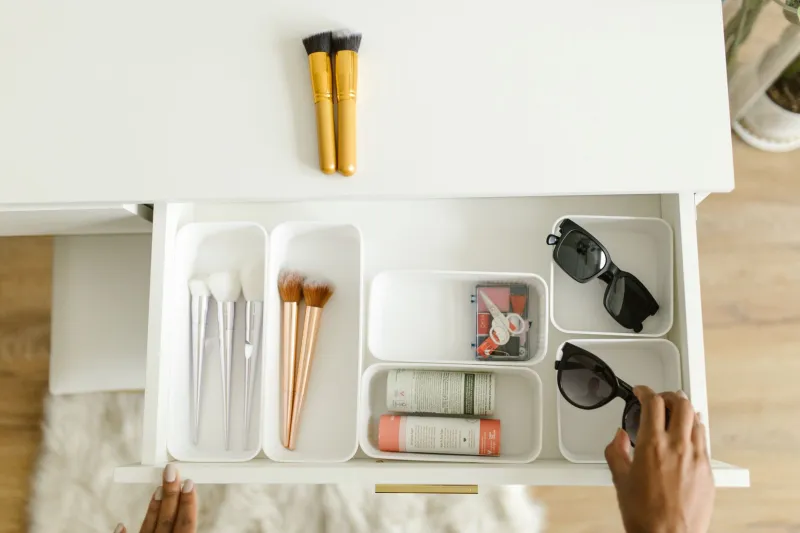
That Drawer You're Avoiding
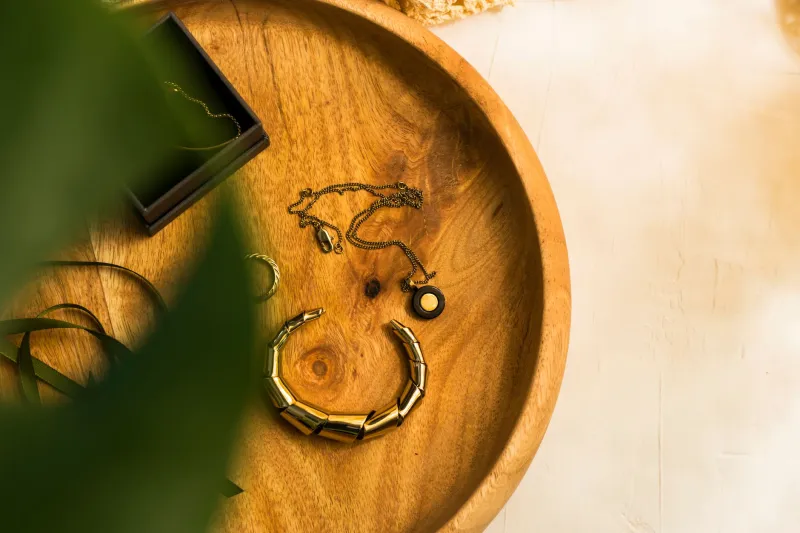
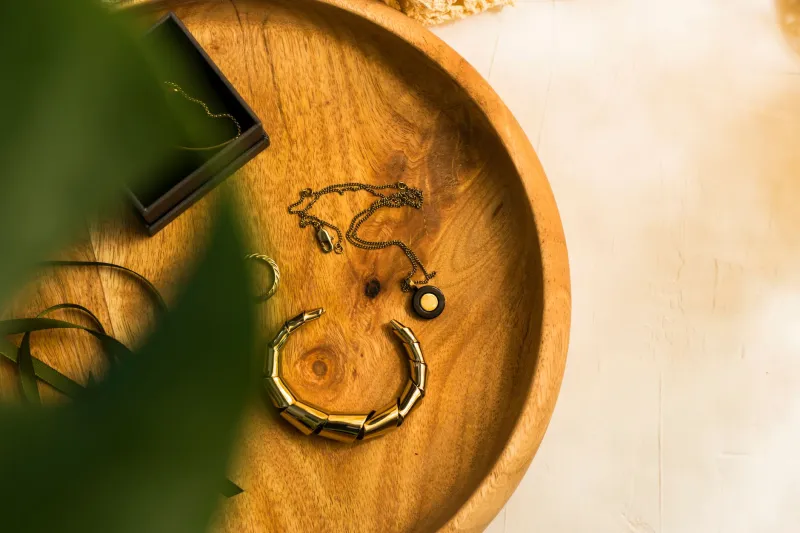
You know the one. Maybe it's a decorative dish on your dresser, a velvet-lined box you received as a gift, or the back corner of a nightstand drawer. It's where the earrings you bought at that boutique in Austin live alongside the statement necklace you ordered during a late-night scroll session. You remember loving all of it in the moment. And yet, somehow, none of it ever makes it out the door with you.
This isn't a willpower problem or a storage problem. It's a gap problem — specifically, the gap between the person you imagine yourself to be when you're shopping and the person who actually gets dressed every morning. That gap is where accessories go to die, and most of us have been feeding it for years without really noticing.
Why We Buy What We Don't Wear
Here's the honest truth: aspirational shopping is incredibly easy to fall into, and the accessories market is practically built around it. A pair of bold geometric earrings doesn't just sell you metal and color — it sells you the version of yourself who wears them. The woman who walks into rooms differently. The one who has something to say before she opens her mouth.
That's a powerful thing to buy into. And it's not inherently wrong to want that. The problem shows up when the aspirational version of yourself and the actual rhythm of your daily life are pretty far apart.
Maybe you work from home three days a week and run errands the other two. Maybe your social calendar is quieter than it used to be, or your style has quietly shifted toward something more understated without you fully acknowledging it. When your real life doesn't have many occasions that call for a chandelier earring or a layered collar necklace, those pieces end up sitting in that drawer, looking beautiful and feeling like a very gentle form of self-judgment every time you open it.
There's also the matter of trend momentum. When something is everywhere — on every influencer, every brand's homepage, every "must-have" roundup — it creates a kind of urgency that bypasses your actual taste. You're not shopping for your life. You're shopping for the cultural moment, which moves on whether or not you ever wore the thing you bought to participate in it.
The Real Cost of Accumulation
The financial piece is obvious, but it's not even the most significant cost. The more subtle toll is what happens to your relationship with your own style when your collection is full of pieces that don't feel like you.
You open the drawer, see a pile of things you don't reach for, and instead of feeling abundant, you feel stuck. Like your taste is somehow wrong, or like you're failing at the relatively simple act of getting dressed. That mental clutter is real, and it compounds over time.
It also makes it harder to recognize what you actually love. When everything in your collection is fighting for your attention — the impulse buys, the gifts you kept out of obligation, the trend pieces that felt right for about six weeks — the things you genuinely connect with get buried. You stop trusting your own eye because the evidence in your drawer suggests your eye has been off.
What Intention-Driven Design Actually Changes
This is where the way a piece is made starts to matter in a pretty practical way. When designers build with intention — thinking carefully about who's actually going to wear something, in what context, and why it should exist at all — it changes the energy of the object itself. You can feel it when you pick something up. There's a clarity to it. It doesn't ask you to become someone else to wear it. It meets you where you are.
At Nicole Moon Designs, this is the whole point. Every piece in a collection is considered not just for how it looks on a flat surface or in a product photo, but for how it moves through a real day with a real person. That's a different design question than "will this photograph well," and it produces a different kind of result — something you actually want to put on.
When you start shopping from that place, the aspirational gap starts to close. You're not buying a fantasy. You're buying something that fits into the life you actually have, which means it gets worn, which means it does what jewelry and accessories are supposed to do: add something genuine to how you show up.
How to Start Buying Differently
Breaking the cycle doesn't require a dramatic overhaul. It really just requires a few honest questions before you add something to your cart.
Ask where it's going. Not in a vague, "I'll find a place for it" way — but specifically. What are the three occasions in the next month where you'd actually put this on? If you can't name them, that's useful information.
Notice what you're really buying. Is this piece something you love, or is it a version of yourself you'd like to inhabit? Neither answer is automatically wrong, but knowing the difference helps you decide whether the purchase makes sense right now.
Pay attention to what you keep reaching for. The pieces you actually wear tell you more about your taste than anything you've pinned or saved. Look at what's already working and let that guide you toward things that genuinely belong in the same conversation.
Give yourself a pause. Not forever — just long enough for the initial excitement to settle. If you come back to something two or three days later and still want it, that's a different kind of want than the one that shows up at 11pm on a Tuesday.
The Collection You Actually Want
There's a version of your accessory collection that doesn't involve guilt, clutter, or pieces that make you feel like a stranger in your own style. It's smaller than what most of us have accumulated, and it's a lot more satisfying.
Building it isn't about being restrictive. It's about being honest — with yourself about how you actually live, and with the pieces you bring into your life about what you're expecting from them. When those two things line up, you stop filling drawers. You start building something real.