Lost and Found: How to Rescue the Accessories You've Been Ignoring
You know the feeling. You're cleaning out a drawer or reorganizing a shelf, and suddenly — there it is. A necklace you bought on a trip, a pair of earrings you were obsessed with for about two weeks, a scarf so beautiful you kept it folded like it was too good to actually use. And your first thought is some version of: Oh. I totally forgot you existed.
That moment isn't just a little embarrassing. It's actually kind of fascinating. Because you didn't forget you owned that piece because you stopped liking it. You forgot it because it disappeared into the background — out of sight, out of rotation, out of your life.
This is what we're calling the accessory graveyard. Not a dramatic term, just an honest one. It's the collection of pieces you own but never wear, not because they're wrong for you, but because they've been buried under newer purchases, tucked into boxes, or stored somewhere that requires more effort than your morning routine allows.
Let's talk about why this keeps happening — and what to actually do about it.
Why We Forget What We Own
The human brain is wired to notice what's new and visible. When something becomes part of the background — a jewelry box on a shelf, a bin in the closet, a drawer you only open when you're looking for something specific — your brain stops registering it as an option. Psychologists call this habituation: we stop consciously perceiving things that don't change or demand our attention.
For fashion, this plays out constantly. The pieces displayed on your vanity or hanging where you can see them? Those are the ones you reach for. The rest, no matter how beautiful or intentional, essentially stop existing in your daily decision-making.
There's also the "special occasion trap." A lot of us hold onto statement pieces — a bold cuff, a layered necklace, an embroidered bag — waiting for the right moment to wear them. But that moment rarely feels right enough, so the piece sits. And sits. Until it feels almost too late to pull it out, like you've missed your window.
Spoiler: you haven't. The window is always open.
The Moon Phase Way of Looking at Your Collection
Here at Nicole Moon Designs, we think a lot about cycles — how things wax and wane, how what feels dormant isn't necessarily gone. The moon doesn't disappear when it's new; it's just not visible yet. Your accessories are the same way.
Think of your collection in phases. The pieces you wear constantly? Full moon energy — bright, present, impossible to ignore. The pieces you've recently rediscovered or started experimenting with? Waxing phase — building momentum. And the pieces buried in the back of a drawer, unseen and forgotten? That's the new moon. They're not dead. They're just waiting for the conditions that bring them back into visibility.
The goal isn't to force every piece into constant rotation. It's to create the conditions where more of your collection has a chance to be seen — by you, first and foremost.
A Practical Rescue Operation
So how do you actually do this? Here's a low-pressure approach that works even if you don't have a whole weekend to dedicate to a closet overhaul.
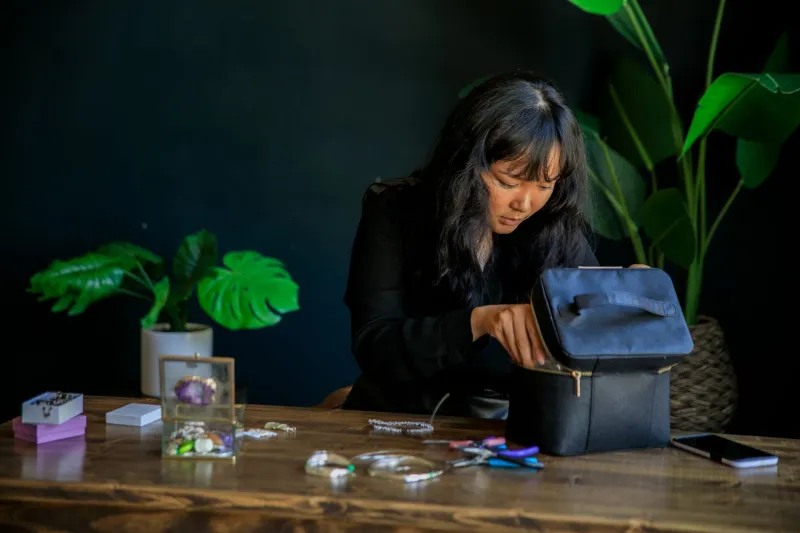
Do a full surface inventory. Pull everything out — every jewelry box, every dish, every bag you haven't opened in months. Don't edit yet. Just look. Lay it all out so you can see the full picture of what you actually own. This step alone is often enough to trigger a wave of "oh, I love this" moments.
Separate by visibility. Once everything's out, sort loosely into two groups: pieces you reach for regularly, and pieces you haven't touched in three months or more. You're not getting rid of anything yet — you're just seeing what's been living in the dark.
Pick three pieces to reintroduce. From that second pile, choose three items that genuinely excite you right now. Style them with what you're already wearing this week. No big occasion required. A statement ring with your Tuesday jeans-and-tee situation. A vintage pin on your jacket. A necklace you bought at a craft fair two years ago and never wore again.
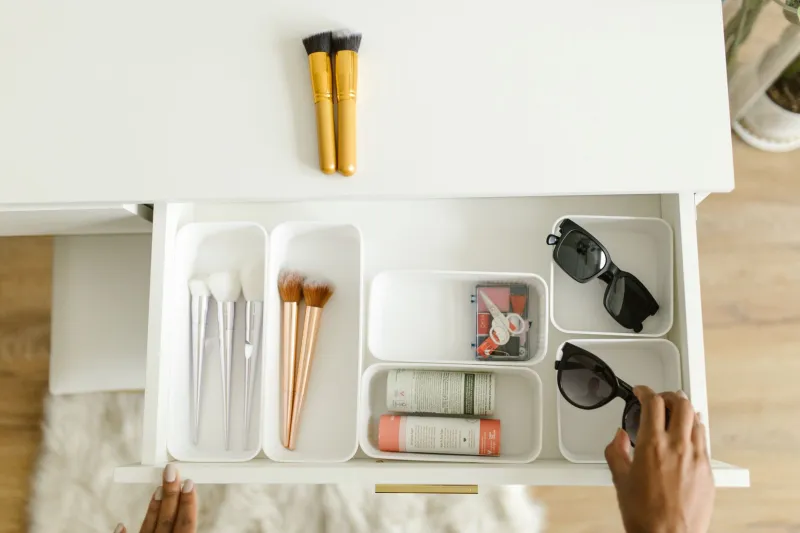
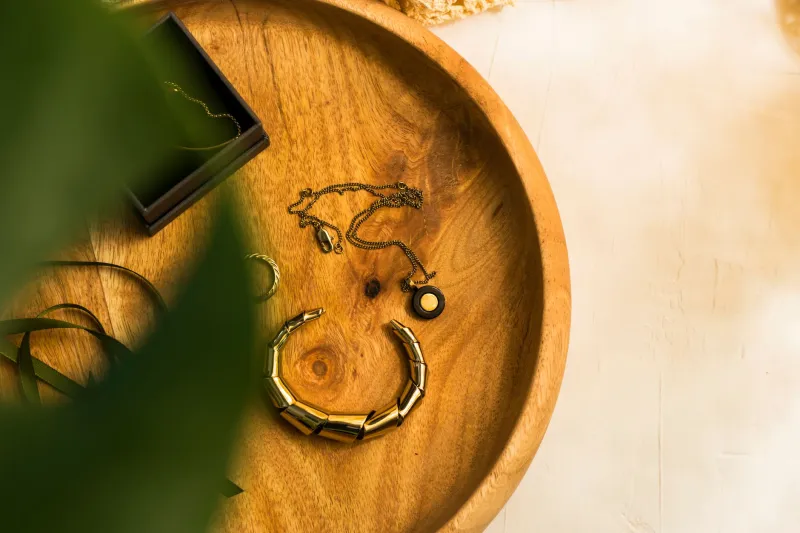
Change how you store things. This is the long game. If your most beautiful pieces are hidden in boxes or tangled in drawers, they'll keep getting forgotten. Even small changes — a wall hook, a clear tray on your dresser, a single ring dish in your bathroom — can dramatically shift which pieces make it into your daily rotation. Visibility is the whole thing.
The "Too Good to Wear" Problem
Let's address this directly, because it's more common than people admit. A lot of us have pieces we're saving — consciously or not — because they feel too special for regular life. Too delicate. Too bold. Too expensive. Too meaningful.
But here's the thing: accessories don't serve you sitting in a box. They serve you when they're on your body, adding something to how you move through your day. The necklace you inherited, the earrings you splurged on, the bag you carried exactly once — they deserve to be used, not preserved.
Wearing something meaningful on an ordinary Tuesday is not a waste. It's actually the point.
Bringing It Full Circle
Your accessory collection is a kind of archive — pieces you chose, pieces that meant something to you at different points in your life, pieces that reflect versions of yourself you might be ready to revisit. When you stop seeing them, you lose access to all of that.
Rescuing your forgotten pieces isn't really about decluttering or organizing, though those things help. It's about staying in an active relationship with what you own. It's about letting your collection evolve and surprise you instead of defaulting to the same three things every morning because they happen to be the most visible.
The new moon always becomes the full moon again. Your best pieces are still in there. You just have to go find them.