Why You Keep Buying the Same Earrings Over and Over (And What That Actually Says About You)
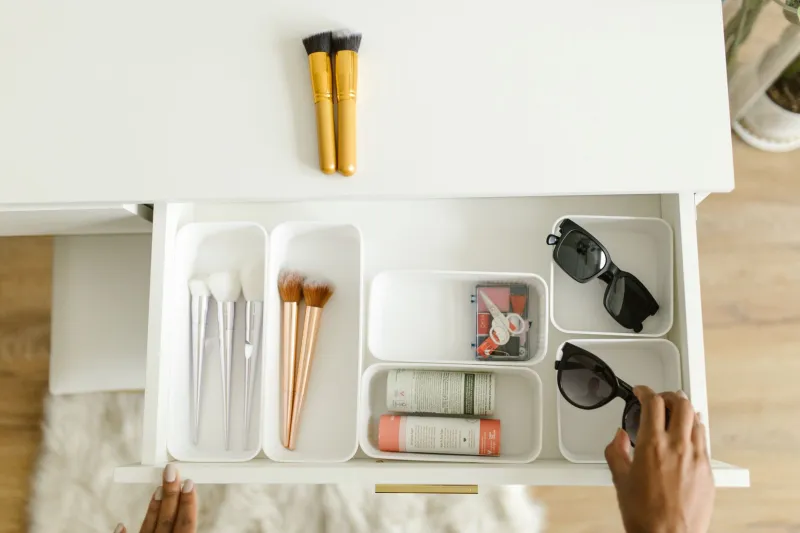
Open your jewelry dish. Your accessories drawer. That little ceramic bowl on the bathroom counter where things go to be forgotten. Now take a slow look at what's actually in there.
If you're noticing a pattern — the same hoop shape in four different metals, three versions of a chunky chain necklace, a small army of tortoiseshell clips you swore you needed — you're not imagining it. And you're definitely not alone.
Repetitive accessory buying is one of the most common (and least talked about) patterns in how people shop. It's easy to chalk it up to bad memory or a weak moment at checkout, but what's actually happening tends to run a little deeper than that.
The Feeling You're Chasing (Not the Thing)
Here's the thing about accessories: we almost never buy them purely for function. A bag holds your stuff, sure. But that's not really why you bought it.
Most accessory purchases are emotional. We're chasing a feeling — put-together, confident, a little more like the version of ourselves we're working toward. When a piece delivers that feeling, even briefly, it creates a kind of imprint. And the next time you're in a store or scrolling through a product page feeling a little flat, your brain goes back to that imprint and says: something like that.
So you buy something like that. And then something like that again. And eventually you have seven statement necklaces and you're still somehow convinced you need another one.
The purchase isn't the problem. The loop is.
Why You Don't Trust What You Already Own
One of the quieter forces behind repetitive buying isn't desire — it's doubt. A lot of us don't fully trust the pieces we already have. We forget what we own. We underestimate how much mileage we could get out of something with a little more intention. Or we've mentally filed certain pieces under "special occasion" so many times that they never actually get worn.
When you don't trust your existing collection, every new thing looks like a solution. That new pair of earrings feels like it'll finally complete the look — even though you have three pairs at home that could do the same job if you'd just give them a real shot.
This is worth sitting with, because it shifts the question from what should I buy next to what am I not seeing in what I already have?
The Void That Accessories Can't Fill
Sometimes repetitive buying isn't about style at all. It's about something else entirely — stress, transition, boredom, a season of life where things feel a little out of control. Accessories are small, relatively affordable, and easy to justify. They're the most socially acceptable form of retail therapy in the fashion world.
There's no shame in that. But it's useful to recognize when a purchase is genuinely style-driven versus when it's filling a gap that has nothing to do with your wardrobe. The piece you buy when you're anxious or exhausted rarely ends up being the one you reach for. It ends up in the drawer. And then you buy another one.
How to Actually Identify Your Pattern
If any of this is landing, here's a practical starting point: do a quick audit of your accessories — not to declutter necessarily, just to observe.
Pull everything out and group similar items together. You'll probably find clusters. Those clusters are data. They're showing you what shape, material, or aesthetic your brain keeps returning to. That's not a flaw in your taste — it's actually useful information about what you genuinely love.
Now ask yourself: do I actually wear these things? Or do I keep buying versions of them hoping this one will finally be the one I reach for?
If it's the latter, you might not need a new version of that thing. You might need to figure out why the versions you have aren't making it into rotation.
Breaking the Loop Without Becoming a Minimalist
This isn't a pitch for capsule wardrobes or owning exactly twelve accessories. Style is personal, and some people genuinely love collecting. The goal isn't to buy less — it's to buy with more clarity.
A few things that actually help:
Set a waiting period. When you feel pulled toward a purchase, give it 48 hours. Not to talk yourself out of it, but to check in on whether the pull is still there once the initial rush fades. A lot of repetitive purchases don't survive the wait.
Name what you're actually looking for. Before you buy, try to articulate what you want this piece to do for you. Not just aesthetically, but functionally and emotionally. If you can't quite name it, that's worth noticing.
Revisit something you already own. Before adding to the collection, pull out one piece you haven't worn in a while and actually style it. Sometimes the thing you were about to buy is already sitting in your drawer, just waiting to be seen differently.
Buy for your actual life, not your aspirational one. This one's big. A lot of us shop for the version of ourselves who goes to gallery openings and rooftop dinners, not the version who's running errands on a Tuesday. Both lives deserve good accessories, but they're not the same accessories.
What Intentional Buying Actually Looks Like
At Nicole Moon Designs, the idea of designing with intention isn't just about how pieces are made — it's about the relationship between what's created and how it actually gets worn. A piece that's bought thoughtfully, that fits into a real life rather than an imagined one, is a piece that earns its place.
That's the difference between an accessories graveyard and a collection that means something. Not fewer things necessarily, but truer ones. Pieces you chose because you understood what you were looking for — not because you were chasing a feeling you couldn't quite name.
You already know your taste. The pattern in your drawer is proof of that. The next step is just learning to trust it enough to stop buying the same thing over and over, hoping it'll finally feel like enough.
It already is. You just might not have given it the chance to prove it yet.