Held Onto Too Long: How to Finally Release the Accessories That No Longer Fit Your Life
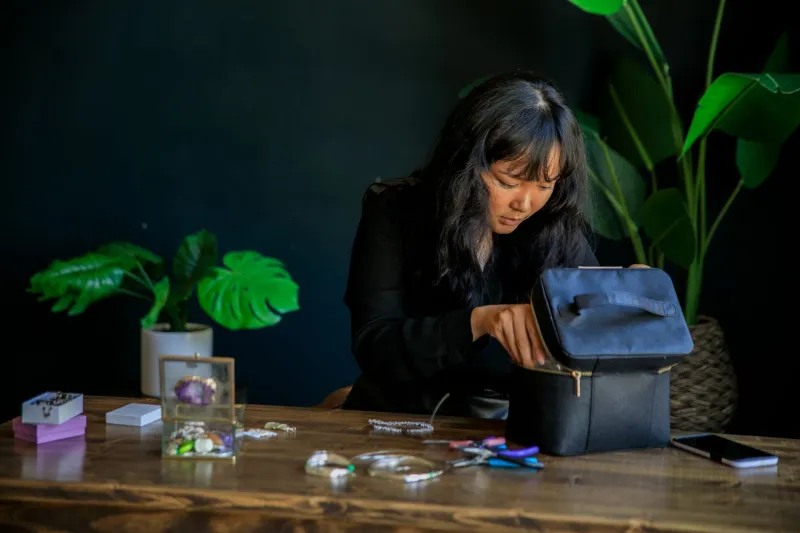
Open any jewelry box, dig into any closet shelf, and you'll probably find them — the pieces you keep moving around without ever actually wearing. The earrings from a trip you took in your twenties. The belt that felt so you about four years ago. The structured bag you bought for a job you've since left behind.
They're not broken. They're not ugly. But somehow, every morning, you reach right past them.
This isn't a story about minimalism or some ruthless purge. It's about understanding why we hold onto accessories long after they stop serving us — and giving yourself permission to finally let them go with care.
The 'Just in Case' Trap
Accessories are especially vulnerable to what we might call just-in-case thinking. Unlike a coat or a pair of jeans, a necklace takes up almost no physical space. A silk scarf folds down to nothing. So the logic goes: Why get rid of it? It barely takes up room.
But that reasoning is a little misleading. Physical space isn't the only kind of space these pieces occupy. Every item in your collection is something your brain processes — consciously or not — when you open a drawer or reach for something to wear. The more pieces you have to mentally sort through, the more decision fatigue creeps into what should be a pretty enjoyable part of your morning.
And then there's the guilt. Keeping something you never wear doesn't feel neutral. It feels like a quiet, low-grade reminder that you made a purchase that didn't pan out, or that you should be the kind of person who wears statement earrings, even if you've realized you're really not.
The just-in-case mentality promises future use that almost never arrives. And in the meantime, it crowds out the pieces you actually love.
Why Sentimental Pieces Are the Hardest Call
Sentiment is real, and it deserves respect. Some accessories carry genuine weight — a bracelet from your grandmother, a ring you wore through a meaningful chapter of your life, a pair of earrings someone who loved you gave you on a birthday you still remember clearly.
The tricky part is that not every piece feels sentimental in a straightforward way. Some things you keep because releasing them feels like erasing a version of yourself you're not quite ready to say goodbye to. The bold, chunky jewelry from when you were leaning hard into maximalism. The delicate gold pieces from a quieter, more understated phase. The festival accessories from a summer that felt like everything.
Here's the thing: letting go of the object doesn't erase the memory. The experience lives in you, not in the earring. Keeping pieces that no longer align with who you are now doesn't honor the past — it just creates static between you and your present self.
If something is genuinely sentimental, it deserves intentional treatment. That might mean keeping it in a dedicated memory box rather than your everyday collection. It might mean passing it to someone who will actually wear it and carry the story forward. It might mean photographing it before you let it go — a small ritual that closes the chapter with intention instead of avoidance.
The Honest Audit: Questions Worth Asking
Before you decide what stays and what goes, slow down. This isn't about being harsh with yourself — it's about being honest. Pull everything out, and for each piece, sit with a few real questions:
When did I last wear this? Not could I wear it — when did I actually reach for it? If you can't remember, that's information.
Does this feel like me right now? Not the me from three years ago, not the me you aspire to be eventually — the me getting dressed on a regular Tuesday.
Would I buy this today? If you walked past it in a shop right now, would it stop you? If the answer is a hard no, that tells you something.
Am I keeping this out of guilt or genuine love? There's a difference between a piece you treasure and a piece you feel obligated to hold onto. One energizes your collection. The other just weighs it down.
You don't have to answer these questions coldly. Let yourself feel whatever comes up. Just don't let feeling be the reason you avoid the question entirely.
Making Space for What's Actually Coming
Here's what the decluttering conversation often misses: this isn't really about subtraction. It's about alignment.
When your accessory collection is filled with pieces that genuinely reflect who you are — your actual aesthetic, your real lifestyle, the way you actually want to move through the world — getting dressed becomes easier and more satisfying. You stop scrolling for outfit inspiration because you already have a clear sense of what feels right. You stop second-guessing because everything you're choosing from is something you actually chose for yourself, intentionally.
At Nicole Moon Designs, we think about this a lot. The accessories and pieces we put into the world are designed to be worn, not stored. They're meant to become part of someone's actual life — not sit on a shelf waiting for an occasion that never comes. That's the whole point of building something with intention: it should connect with the person wearing it, in the life they're actually living.
When you clear out the pieces that have already had their moment, you create real room — not just physical room, but creative room — for pieces that belong to who you're becoming.
A Gentler Way to Let Go
If a full clear-out feels overwhelming, start smaller. Pull out just your jewelry, or just your bags, or just your scarves. Work through one category at a time over a few weeks. There's no deadline here.
For the pieces you're releasing, consider where they go next. Selling through platforms like Poshmark or Depop means they find someone who actually wants them. Donating locally keeps them circulating in your community. Gifting to a friend who admires them is maybe the nicest ending of all — you get to see the piece get a second life on someone who genuinely lights up wearing it.
And for the pieces that make the cut — the ones you hold up and immediately feel good about — give them a proper home. Organize them in a way that makes them visible and easy to reach. An accessory you can't see is an accessory you won't wear.
Your collection should feel like a reflection of you, not an archive of every version of you that ever existed. Give yourself permission to edit. The person you are right now deserves a wardrobe — and an accessory drawer — that's actually built for her.