Why You Keep Playing It Safe With Accessories (And How to Finally Stop)

There's a specific kind of hesitation that happens when you're getting dressed and you reach for a second necklace, a third ring, or a hat that doesn't exactly "go" with the rest of the outfit. You hold it there for a second. You think about it. And then you put it back.
Not because it looked bad. Because something in your brain said no.
That voice has a name. It's your personal style rulebook — and most of us have been writing it since middle school without realizing it. The problem isn't that you have taste. The problem is that your taste has quietly calcified into a set of restrictions that are limiting you more than they're guiding you.
Let's talk about what's actually going on, where those rules come from, and how to start experimenting without blowing up everything you love about the way you dress.
The Rules You Made Without Knowing It
Style rules rarely arrive with instructions. They sneak in through a comment someone made in tenth grade, a magazine spread you internalized at nineteen, or a single bad outfit day that scared you straight for a decade.
Don't mix metals. Don't layer necklaces if they're different styles. Don't wear statement earrings with a statement necklace. Don't pair prints with texture. Don't stack rings on more than two fingers.
Sound familiar? These aren't laws. They're suggestions — and even then, most of them were invented by people trying to sell you a coordinated set.
The first step is identifying which rules are actually yours. Grab a notebook and write down every "I never" or "I don't" that applies to how you get dressed. I never mix gold and silver. I don't layer chokers with longer chains. I never wear dangly earrings with a busy top. Just list them out without judgment.
Now, next to each one, ask: where did this come from? Was it a specific moment? A person? A trend from a specific era? Or do you genuinely not know — it's just always been there?
The ones with no clear origin are the most interesting. Those are the rules you absorbed, not the ones you chose. And absorbed rules deserve to be questioned.
What Fashion Fear Actually Looks Like
Fashion fear doesn't always feel like fear. It usually feels like practicality.
It's just easier to keep it simple. That's the classic cover story. But easier for whom? Easier for the version of you that doesn't want to be looked at too hard, doesn't want to stand out, doesn't want to risk getting it wrong.
There's also the fear of looking like you're trying too hard — which is a very American anxiety, by the way. We have this cultural suspicion of effort in personal style. Like the goal is to look great while appearing like you did nothing. That pressure pushes a lot of people into understated, predictable combinations that technically work but never actually excite.
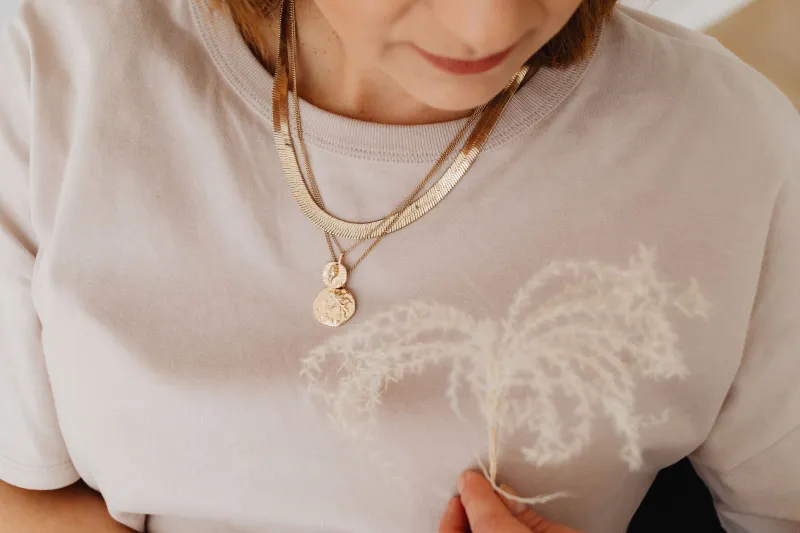
And then there's the comparison trap. You see someone on Instagram stacking mismatched earrings and layering a chunky chain over a delicate pendant and it looks incredible on them, and you think: that's not for me. But why isn't it for you? You haven't actually tried.
A Framework for Testing Bolder Combinations
You don't have to overhaul your whole approach in one morning. In fact, that's the wrong move. Radical style shifts rarely stick because they don't feel like you — and then you retreat back to the safe zone and stay there.
Instead, try this three-step approach.
Step one: Start with one rule at a time. Pick the rule from your list that feels the least scary to break. Maybe it's mixing metals. Maybe it's layering two necklaces of different lengths. Just one. Give yourself one week to experiment with only that rule — try different combinations of it every time you get dressed.
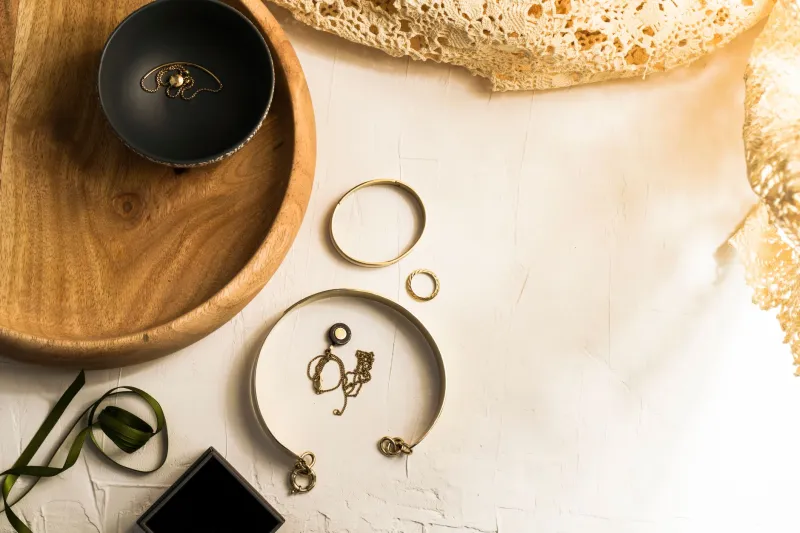
Step two: Use your existing pieces. Don't buy anything new yet. The point is to discover what you already have from a different angle. Pull out pieces you love individually but never pair together. Lay them on a flat surface — a bed, a table — and start physically combining them. You'll start to see unexpected connections. A structured cuff that plays off a delicate ring. A bold beaded necklace that actually grounds a layered chain look rather than competing with it.
Step three: Wear it somewhere low-stakes first. A coffee run. A quick errand. Somewhere you'll be seen but not scrutinized. Get comfortable in the combination before you commit it to a dinner out or a work meeting. You're not hiding — you're calibrating. There's a difference.
The Aesthetic Anchor Trick
Here's something that makes bold combinations feel more intentional and less chaotic: pick one element as your anchor.
An aesthetic anchor is the piece in your look that sets the tone — the one everything else responds to. It could be a single strong earring, a standout ring, or a necklace with real visual weight. Once you've identified your anchor, you can layer around it more freely because you have a center of gravity.
This is actually how a lot of the most interesting dressers approach accessories. They're not following a formula. They're building outward from one clear focal point and letting the rest be more improvisational.
At Nicole Moon Designs, this is something we think about a lot when we're putting collections together — how pieces can serve as anchors for a broader look, or how they can be the expressive accent that responds to someone else's anchor. Not every piece needs to do the same job. That's what makes layering interesting.
Letting Your Style Actually Evolve
Here's the thing about self-imposed style rules: they made sense at some point. They were protective. They helped you feel put-together when you were still figuring out what that meant for you.
But style is supposed to move. It's supposed to reflect who you are right now — not who you were when you first started paying attention to what you wore.
If you've been dressing the same way for three or more years without questioning it, there's a good chance you've outgrown some of your own restrictions. Not all of them — some rules you keep because they genuinely reflect your aesthetic. But some of them are just habit. And habit isn't the same as taste.
The accessories sitting in your drawer, the ones you love but never reach for because they "don't go" with anything — they're waiting for you to write a new rule. One that says: let's see what happens.
That's where the interesting stuff is. Not in the perfectly matched, safely coordinated look you've done a hundred times. In the combination you almost didn't try.