The Long Game: How to Choose Accessories That Get Better With Age
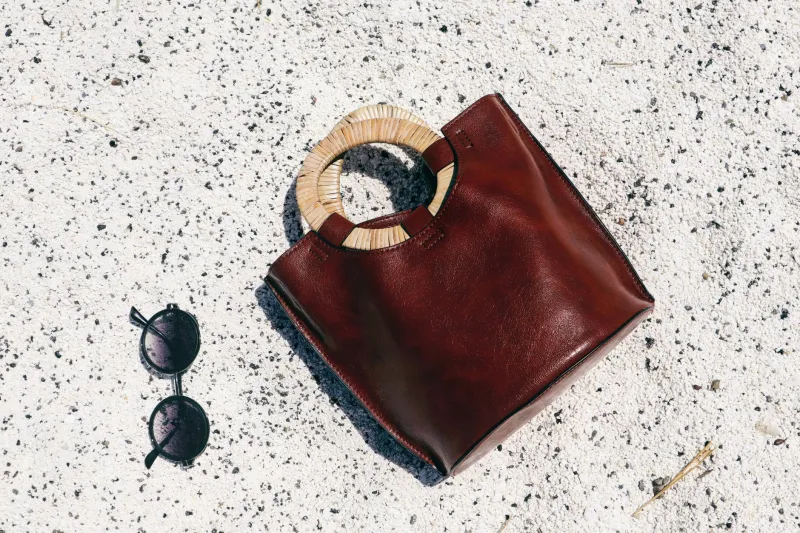
There's a particular kind of satisfaction that comes from pulling out a bag you've owned for eight years and realizing it looks better now than it did when you first brought it home. The leather has deepened. The hardware has mellowed. It carries a little history — a scuff from a trip, a worn corner from years of daily use — and somehow that history makes it more yours, not less.
Not every piece gets to have that story. Most accessories are designed to look their best the moment you take them off the rack, and to slowly fade from there. But some pieces are built differently. They're made to grow alongside you, to absorb your life rather than resist it, and to become more meaningful with every season that passes.
Knowing how to spot the difference before you buy? That's where the real work begins.
Why Most Accessories Have an Expiration Date
Trend-driven pieces are engineered to feel urgent. The color is of-the-moment. The silhouette references something that's been all over every feed for the past six months. The hardware is flashy in a way that reads very specifically as right now. And that's not inherently a bad thing — there's real joy in wearing something that feels completely current.
But those pieces rarely age gracefully, because they were never meant to. They're designed to be replaced when the trend cycle moves on, which it always does. The neon resin earrings that felt electric in one summer start to feel dated by the next. The micro-bag that was everywhere for two straight years suddenly looks like a very specific moment in time rather than a timeless choice.
The problem isn't that you bought them. The problem is when those are the only kinds of pieces you're investing in — when your entire collection is built on things that were always going to expire.
What Makes a Piece Actually Timeless
Timeless doesn't mean boring. It doesn't mean beige or minimalist or stripped of personality. What it really means is that the design logic behind a piece isn't dependent on a specific cultural moment to make sense.
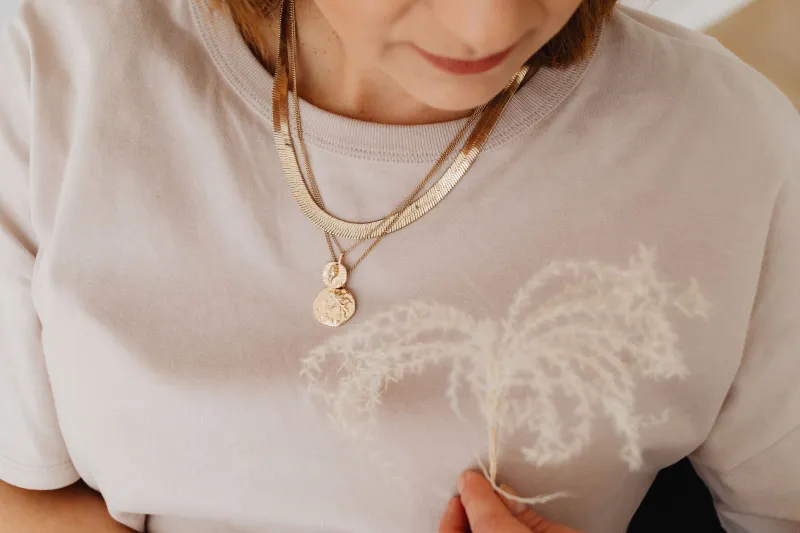
A well-proportioned gold chain necklace works because proportion and material quality transcend trend cycles. A structured leather tote works because the function is sound and the form is considered. A pair of simple sterling hoops works because they complement rather than compete with whatever else you're wearing.
Think about the accessories that have appeared consistently in style across the last several decades — not the exact pieces, but the types. Scarves worn as belts or headbands. Layered chains in mixed metals. Statement rings that are bold without being costume-y. Leather goods in neutral tones with clean lines. These things keep coming back because the underlying design principles are solid, not because fashion keeps deciding to revive them out of nostalgia.
When you're evaluating a potential purchase, it helps to ask yourself: would this piece have made sense ten years ago? Could I imagine wearing it ten years from now? If the answer to both is yes, you're probably looking at something with real staying power.
Materials That Tell a Better Story Over Time
Design is only half the equation. The other half is what the piece is actually made of.
Full-grain leather develops a patina that synthetic materials simply can't replicate. It absorbs oils from your skin, softens in exactly the places where it's handled most, and takes on a warmth and depth that a brand-new piece doesn't have. That transformation is the whole point — you're not fighting the aging process, you're participating in it.
Solid metals — sterling silver, gold-filled, solid gold — tarnish and wear in ways that can be cleaned, polished, and managed over years. They don't flake or peel. A piece made from quality metal can be replated, resized, repaired. It has a life cycle that extends well beyond the first season you wear it.
Natural stones, quality enamel, hand-knotted textiles — these materials all share something in common: they respond to time and wear in ways that add character rather than subtracting it. Compare that to plated metals that chip to reveal a different color underneath, or synthetic stones that cloud and scratch with use. The difference isn't just aesthetic. It's a difference in what the piece is designed to become.
Recognizing the Pieces That Are Already in It for the Long Haul
Sometimes the heirloom-worthy pieces aren't the ones you buy new. They're the ones that have been sitting in a box at the back of your closet, or living in a velvet pouch on your grandmother's dresser, or showing up at estate sales with decades of wear already built in.
Pre-loved accessories with obvious quality construction are often better investments than brand-new trend pieces at the same price point. The fact that they've already survived years of use tells you something important about how they were made.
When you're evaluating a secondhand find — or even a new piece — look at the construction details. Are the clasps solid and well-attached? Is the stitching even and tight? Does the hardware feel substantial or hollow? Does the piece sit and hang the way it's supposed to, or is there something slightly off about the proportions? These details tell you whether something was built to last or built to look good on a shelf for one season.
Building a Collection That Compounds
The most satisfying wardrobes are ones where the pieces build on each other over time. A quality leather bag you've had for years pairs naturally with a new silk scarf. A pair of gold hoops you've worn for a decade still works with whatever you're reaching for today. The longer you've had something, the more it's proven its versatility — and the more it becomes genuinely, specifically yours.
This is the difference between a collection and an accumulation. An accumulation is what happens when you buy reactively, trend by trend, and end up with a drawer full of pieces that don't connect to each other or to any coherent sense of who you are. A collection is what happens when you're intentional — when you invest in pieces that are designed to grow with you and to make everything else you own work harder.
Start small if you need to. Pick one category — earrings, bags, rings — and commit to buying one genuinely high-quality piece this year instead of three or four trend-driven ones. Wear it consistently. Pay attention to how it ages. Notice what it goes with, how it makes you feel, how it starts to feel like an extension of you rather than something you put on.
That's the beginning of a collection that doesn't expire. And once you know what that feels like, it's hard to settle for anything less.