Why Your Feed Is Lying to You About Fashion (And What to Do Instead)
Let's be honest about something: if you've scrolled through your social media feed lately and felt like everyone is wearing the exact same thing, you're not imagining it.
The same viral silhouettes. The same trending color palette. The same three "must-have" pieces making the rounds from account to account, algorithm to algorithm. And somewhere in a warehouse the size of a small city, thousands of near-identical versions of those pieces are being manufactured, shipped, and delivered before the trend even has a chance to breathe.
This is the world fast fashion and algorithmic culture built together. And it's worth talking about — not to shame anyone for how they shop, but because the fashion landscape is genuinely poorer for it.
The Algorithm Was Never Designed to Help You Find Your Style
Here's the uncomfortable truth about recommendation engines: they're not built to show you what's interesting. They're built to show you what's engaging — meaning what gets clicks, saves, and shares at scale. Those are two very different things.
What goes viral isn't necessarily what's original or thoughtful or even good. It's what's familiar enough to feel safe but different enough to feel new for about 48 hours. It's content engineered to perform, and fashion has become one of its most willing participants.
The result is a feedback loop where consumers see the same trends amplified across every platform simultaneously, buy into them quickly, and then discard them just as fast when the next wave hits. And the brands best positioned to win that game are the ones with massive manufacturing capacity and rock-bottom price points — not the ones doing something genuinely creative.
Independent designers get filtered out. Not because their work isn't compelling, but because the algorithm rewards volume and velocity over depth.
What Gets Lost When Originality Gets Crowded Out
Fashion, at its best, is one of the most personal forms of creative expression humans have. The way you put together an outfit tells a story about who you are, where you've been, and what you value. It's a daily act of self-authorship.
But when your options are primarily curated by an algorithm trained on mass behavior, that self-authorship gets quietly undermined. You start dressing in the language of what's trending rather than the language of who you actually are.
Independent designers resist that homogenization. They're not making decisions based on what sold 10 million units last quarter. They're making decisions based on creative vision, craftsmanship, and a genuine point of view. The result is clothing and accessories that feel different because they are different — conceived and executed by real people with real aesthetic philosophies, not focus-grouped into blandness.
That diversity of creative voices matters. Fashion has always been richer when it's plural — when there are many aesthetics coexisting and competing and inspiring each other. Algorithm culture flattens that plurality into a single trending moment, repeated endlessly.
The Case for Buying Less and Choosing Better
Supporting independent fashion brands isn't just a cultural argument — it's a practical one, too.
Fast fashion's business model depends on you buying a lot and caring a little. Low price points are designed to lower your commitment threshold: if it falls apart in six months, no big deal, it only cost $18. The problem is that this cycle is expensive in ways that don't show up on the price tag — environmentally, ethically, and even personally, in the form of a closet full of things that don't actually make you feel good.
When you shift your spending toward independent designers, even if it means buying less overall, you tend to end up with pieces that last longer, wear better, and actually reflect your taste rather than a trend cycle you were briefly caught up in. You're investing in your wardrobe rather than renting from it.
At Nicole Moon Designs, that's the whole philosophy. Every piece is created with intention — not to capitalize on a 30-second trend window, but to offer something that has a genuine place in a real person's life and wardrobe. That approach takes longer. It costs more. And it produces something fundamentally different from what a fast fashion supply chain can offer.
Supporting Indie Designers Is a Form of Creative Participation
There's something else worth naming here: when you buy from an independent brand, you're not just making a transaction. You're participating in a creative ecosystem.
Small design brands — the ones run by one or two people with a strong vision and a commitment to craft — exist because enough people decided their work was worth seeking out. Every purchase, every share, every conversation that brings new eyes to an independent designer's work is part of what keeps that creative voice alive.
In an industry increasingly dominated by a handful of massive players with enormous advertising budgets, that matters. A lot.
The fashion landscape is more interesting, more culturally rich, and more genuinely diverse when independent designers have room to operate. And they only have that room because consumers choose to look beyond the algorithm.
How to Actually Find Independent Brands Worth Supporting
Okay, so how do you do it? Because "shop independent" sounds great until you realize your entire discovery process is built on platforms that are actively working against you finding them.
A few starting points:
Go looking with intention. Instead of letting the algorithm surface options for you, search for specific aesthetics, values, or design philosophies you care about. Look for designers who talk about their process, their materials, and their creative vision — not just their product.
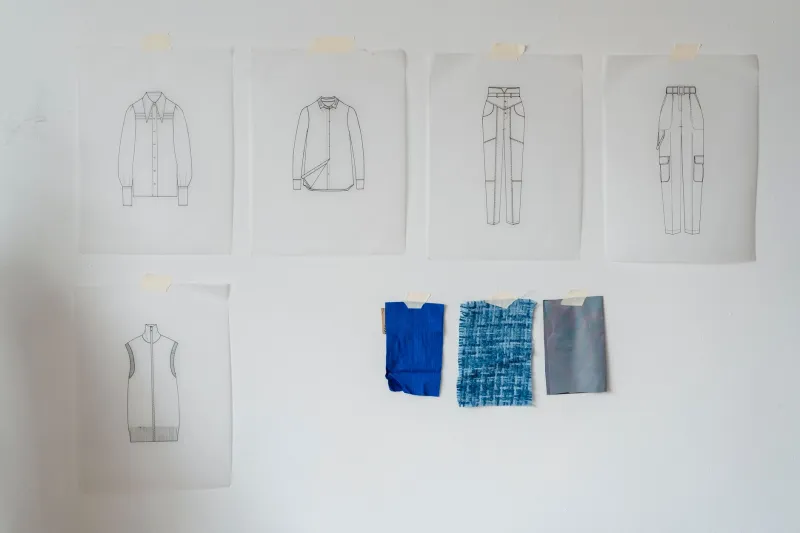
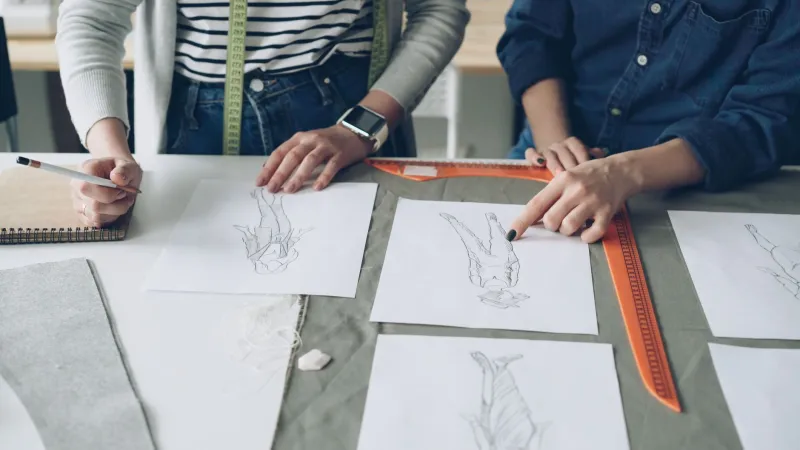
Follow the makers, not just the products. Independent designers who share their creative process — the sketches, the fabric sourcing, the decisions behind a collection — are often the ones doing the most interesting work. That transparency is itself a signal.
Let yourself be slow about it. You don't have to overhaul your entire wardrobe or figure out your whole philosophy at once. Start by adding one or two pieces from independent brands and notice how they feel compared to trend-driven purchases. That contrast is instructive.
Read the about pages. Seriously. The story behind a brand tells you everything about whether their values align with yours. If a designer can articulate why they make what they make, that intentionality tends to show up in the work itself.
The Bigger Picture
Fashion is at an inflection point. The algorithm-driven, fast fashion model has made clothing more accessible in some ways and more disposable in almost every way that matters. But there's a growing counter-current — people who are tired of dressing like their feed, who want their wardrobes to actually mean something, who are willing to look a little harder for something real.
Independent brands like Nicole Moon Designs exist for exactly those people. Not to be contrarian for its own sake, but because original design — work created from a genuine place with real craft and intention — produces something that mass production simply cannot replicate.
Your style deserves better than what the algorithm is offering. The good news is that better exists. You just have to go find it.