Dressed for Them, Not You: How to Take Back the Pieces You Bought to Please Someone Else
There's a specific kind of quiet that settles over a piece of jewelry you never quite loved. It sits in the dish on your dresser or buried in a velvet pouch at the back of a drawer, and every time you see it, there's a flicker of something — not nostalgia exactly, not regret. More like a reminder.
A reminder of who you were trying to be when you bought it. Or who you were trying to keep happy.
This is more common than most people want to admit. A surprising number of the accessories we own weren't actually chosen by us — not fully, anyway. They were chosen in response to someone else. A partner who preferred understated pieces. A mother whose taste you absorbed before you had a chance to develop your own. A friend group that dressed a certain way, and the gold hoops you bought because everyone else had them and you wanted to belong. A boss, a first impression, a relationship you were trying to hold together with the right pair of earrings.
None of that makes you weak or easily influenced. It makes you human. But at some point, it's worth asking: how much of what you're wearing is actually yours?
Why We Buy for Other People (Even When We Think We're Shopping for Ourselves)
The psychology behind this is pretty layered. Sometimes it's obvious — someone directly tells you they prefer a certain look, and you shift to accommodate them. But more often, it's subtle. You stop reaching for the chunky statement necklace because your ex made a face once. You start buying delicate, minimal pieces because a person you admired dressed that way and you wanted their approval. You choose safe, neutral accessories at work because you picked up on an unspoken dress code that equated bold with unprofessional.
Over time, those small adjustments accumulate. You end up with a collection that reflects a composite of everyone else's preferences — and somewhere in there, your actual taste gets crowded out.
The tricky part is that the pieces themselves aren't bad. Some of them are genuinely beautiful. Some were expensive. Some came wrapped in real meaning. That's what makes this so hard to sort through.
How to Identify the Pieces That Weren't Really Chosen by You
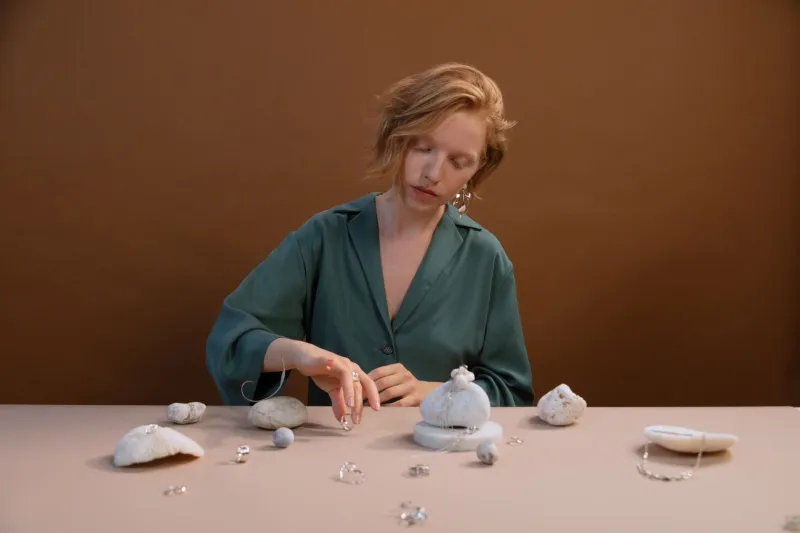
Pull everything out. Rings, bracelets, necklaces, earrings — all of it. Lay it out where you can actually see it, and then do something simple but kind of uncomfortable: ask yourself what you feel when you look at each piece.
Not what you think you should feel. What you actually feel.
The pieces that belong to you — the ones you chose from a genuine place — tend to produce a quiet sense of recognition. You see them and something in you settles. The pieces that were chosen for someone else often produce something different. A low-grade flatness. A vague obligation. Maybe even a little resentment, if you're honest.
Ask yourself:
- Did I buy this because I loved it, or because I thought someone else would?
- Would I have chosen this if no one I knew would ever see me wearing it?
- Does putting this on make me feel more like myself, or more like a version of myself I perform for certain people?
- Is there a specific person or relationship I associate with this piece?
You don't need to answer every question perfectly. Just notice what comes up.
The Three Paths Forward
Once you've identified the pieces that weren't fully yours to begin with, you've got a few options — and none of them are wrong.
Reclaim it. Some pieces are worth keeping, even if they were originally chosen for the wrong reasons. Maybe it's a genuinely beautiful object that you've grown into. Maybe the relationship that influenced the choice is long gone, and you're ready to wear it on your own terms — styled differently, layered in a way that feels like you, or worn in a context that has nothing to do with the person who inspired it. Reclaiming a piece can be surprisingly powerful. It's a small act of taking something back.
Release it. Some pieces just need to go. If every time you put it on you feel like you're wearing a costume from a chapter of your life you've already closed, that's information. You don't owe anything to an object, even an expensive one. Sell it, gift it, donate it. Let it find someone who'll actually love it.
Sit with it a little longer. Not every piece needs an immediate verdict. If you're genuinely unsure, put it somewhere intentional — not buried in a drawer, but not in your daily rotation either. Give yourself a season. See if you reach for it. See if your feelings shift. Sometimes distance is clarifying.
Restyle as an Act of Reclamation
If you decide to keep a piece, think about what it would take to make it feel like yours. This is where styling becomes something more than just aesthetics — it becomes a form of authorship.
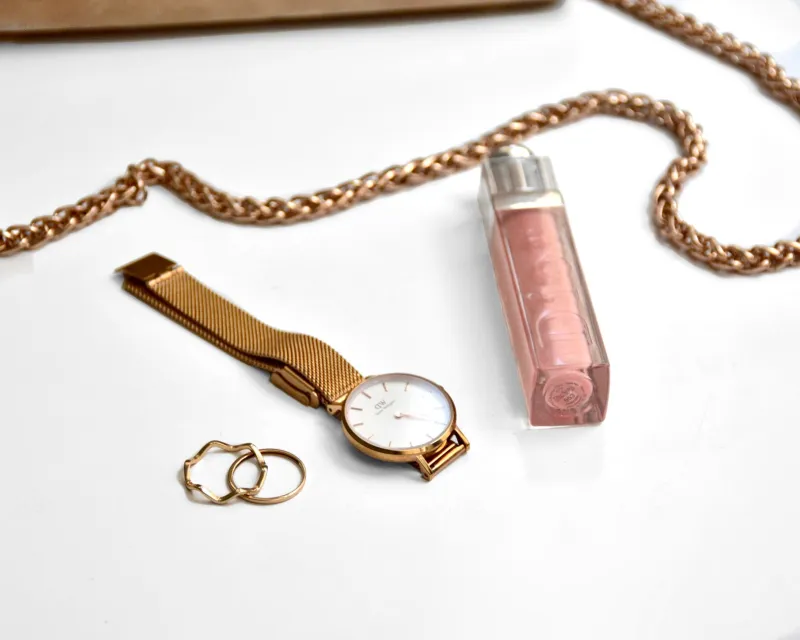
Maybe you always wore that delicate gold bracelet the way someone else suggested, stacked neatly with matching pieces. What happens if you wear it alone? With something unexpected? Layered with a chunky vintage find that would've made that person cringe? The piece is the same. The statement is entirely different.
Accessories are remarkably responsive to context. A brooch that felt stiff and formal pinned to a blazer becomes something else entirely on the strap of a denim tote. A ring that felt too dainty on its own reads completely differently stacked with three others on the same finger. You have more control over how a piece lands than you probably think.
What This Is Really About
At its core, sorting through the accessories you bought for other people is an exercise in understanding your own preferences — maybe for the first time without the filter of someone else's gaze.
That's not a small thing. Style, when it's working the way it should, is one of the clearest and most immediate ways you communicate who you are. When your accessories were chosen to satisfy someone else, that communication gets scrambled. You end up sending a signal that isn't quite yours.
Taking stock of what's in your collection — really taking stock, with honesty — is a way of asking: who am I dressing for now? And is that the answer I actually want?
The pieces that make it through that question are the ones worth building around. The ones that don't — well, they served a purpose once. It's okay to let them go.
Your collection should feel like you walked into it on purpose. Not like something you inherited from every version of yourself that was trying to be enough for someone else.