Stop Overthinking Your Outfit: The Case for Dressing on Instinct

You've been there. You have a full closet, a little extra time, and somehow you end up standing in front of it for twenty minutes before throwing on the same jeans and a top you've worn four times this week. Meanwhile, the outfit you pulled together in three minutes on a Tuesday when you were running late? That one got compliments all day.
There's something quietly fascinating happening in that gap between planning and spontaneity — and it's worth paying attention to.
The Paradox of Too Many Options
When we have more choices, we expect to feel more confident. But research in behavioral psychology has shown for years that the opposite tends to happen. The more options we weigh, the more anxious we get about making the "wrong" one. This isn't just a shopping phenomenon — it plays out every single morning in front of your mirror.
When you try to plan an outfit down to every detail — mentally cataloguing what's clean, what coordinates, what sends the right message — you're essentially loading your brain with a task it wasn't designed to enjoy. Style, at its core, is an expressive act. And expression doesn't thrive under pressure.
This is what some call the lunar closet effect: the idea that your style has its own rhythm, its own pull toward certain textures, colors, and silhouettes on any given day. When you work with that pull instead of against it, something clicks.
What Your Instincts Are Actually Telling You
Here's the thing about intuitive dressing — it's not random. When you reach for something without overthinking it, you're drawing on a deeply personal archive of sensory memory, emotional association, and real-world experience. You know what feels good on your body. You know what made you walk a little taller last spring. You know what color you always get stopped for.
That knowledge doesn't disappear when you're standing in front of your closet at 8 a.m. It just gets drowned out by the noise of "should."
Shopping with intention — choosing pieces that genuinely resonate with you rather than chasing a trend or filling a perceived gap — is what makes intuitive dressing actually work. When every item in your wardrobe is something you genuinely connected with, the spontaneous combinations tend to land. You're not pulling from a pile of compromises. You're working with a curated vocabulary of pieces that already speak your language.
The Role of Quality in Letting Go
One underrated reason people over-plan their outfits? Anxiety about their clothes. Not in a dramatic way, but in small, nagging ways. The top that never quite sits right. The jacket that looks great on the hanger but feels off once you're in it. The color you bought because it was trending but never actually loved.
When you don't fully trust your pieces, you compensate by trying to control the combination. You think harder, plan more carefully, and still feel unsatisfied.
But when every piece in your rotation is something you genuinely like — something made with care, cut with intention, and chosen because it actually fits the way you live — you can afford to be spontaneous. The safety net is already there.
That's a big part of what drives the philosophy behind Nicole Moon Designs. Original pieces designed with real intention give you something to build from intuitively. They don't require a strategy. They just work, because they were made to be worn by someone with a point of view.
How to Start Dressing More Intuitively
If you're used to planning every look, letting go can feel counterintuitive at first. Here are a few ways to ease into it:
Start with how you feel, not what you see. Before you open your closet, take a breath and check in with yourself. Are you feeling soft and low-key today, or sharp and put-together? Bold or understated? Let that sense guide your first reach.
Give yourself a time limit. Seriously — set a three-minute timer. Grab what draws you in, put it on, and commit. You'll be surprised how often it works, and how much lighter you feel for not agonizing.
Stop editing in the mirror for too long. There's a point where looking at yourself too hard starts working against you. If something feels right when you first put it on, trust that feeling. The second-guessing rarely improves the outcome.
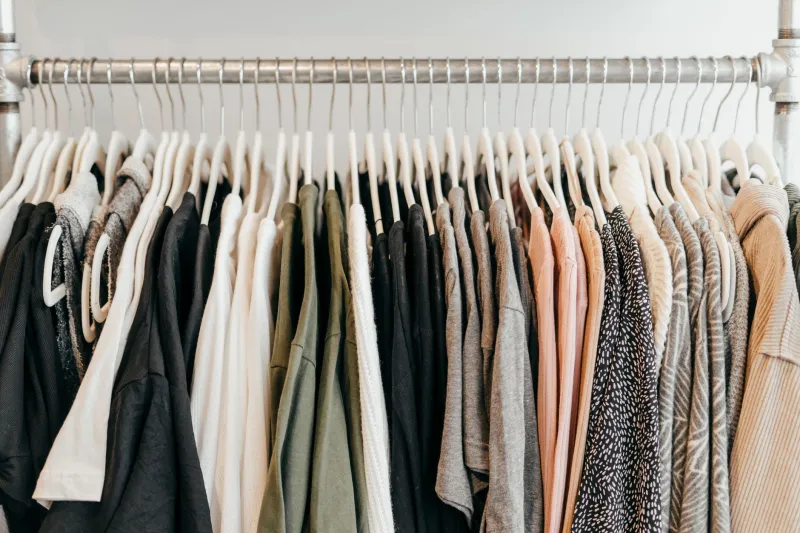
Rotate out the pieces you never reach for. If there are items in your closet that you consistently skip, they might be the source of visual noise that makes everything feel harder. A smaller, more intentional wardrobe is almost always easier to dress from than a stuffed one.
The Confidence Loop
Here's what nobody tells you about personal style: confidence isn't something you build by perfecting your outfits. It's something you build by trusting yourself enough to wear them anyway.
Every time you get dressed intuitively and it works — even a little — you reinforce the belief that your instincts are worth following. That loop compounds over time. You start reaching for things with more ease. You stop needing external validation to feel put-together. You just know.
That's not magic. It's just what happens when you stop trying to dress for an imaginary audience and start dressing for yourself.
The moon doesn't ask for permission to be full. It just shows up. Your style can work the same way — luminous, unplanned, and entirely yours.